

 It’s that time of year again. Every web agency, marketing consultant, and SEO “expert” is publishing their hot takes on what’s coming in 2026. AI-powered this, voice search that, the death of traditional SEO, the rise of some new platform you’ve never heard of.
I’m not doing it. And here’s why you shouldn’t pay much attention to those who are.
The Problem With Predictions Posts
After 20 years building websites and watching trends come and go, I’ve noticed something: most prediction posts are forgotten by February. They’re written because they’re easy content that gets clicks in December and January, not because they actually help small businesses make better decisions.
Remember when everyone said Flash websites were the future? When mobile apps were going to replace websites entirely? When chatbots were going to revolutionize customer service for every business? When crypto was going to change everything about online commerce?
The web development industry loves shiny new things. That’s fine for developers who enjoy experimenting. But for Kent tradespeople, retailers, and service businesses? Chasing every trend is expensive, distracting, and usually unnecessary.
What Actually Hasn’t Changed (And Still Matters More)
Here’s what I’ve learned from launching over 500 websites: the fundamentals that worked in 2004 still work today. They’re just less exciting to write about.
1. Your Website Needs to Load Quickly and Work Properly
Not “achieve a perfect score on some developer tool.” Just load fast enough that people don’t leave, and actually function when they try to contact you or buy something.
I’ve seen businesses obsess over shaving 0.3 seconds off their load time while their contact form has been broken for three months. I’ve watched companies spend thousands on performance optimization when their real problem was that nobody could find their phone number.
What this means for 2026: Check your website works. Actually test your contact forms. Make sure your phone number is visible. Load your site on your phone. These aren’t predictions – they’re things that should have been done in 2025, 2015, and 2005.
2. People Need to Understand What You Do (Immediately)
Every year, businesses convince themselves they need to be more clever, more creative, more mysterious with their messaging. Every year, I spend time helping them realize that clarity beats cleverness every single time.
When someone lands on your website, they should know within seconds:
- What you do
- Where you do it
- How to contact you
If your homepage makes people think “hmm, interesting… but what do they actually do?” – you’ve already lost them.
What this means for 2026: Read your homepage as if you’ve never seen it before. Can a tired person, quickly scanning on their phone, immediately tell what you offer? If not, that’s your priority – not whatever trend emerges in January.
3. You Need to Be Findable for What You Actually Do
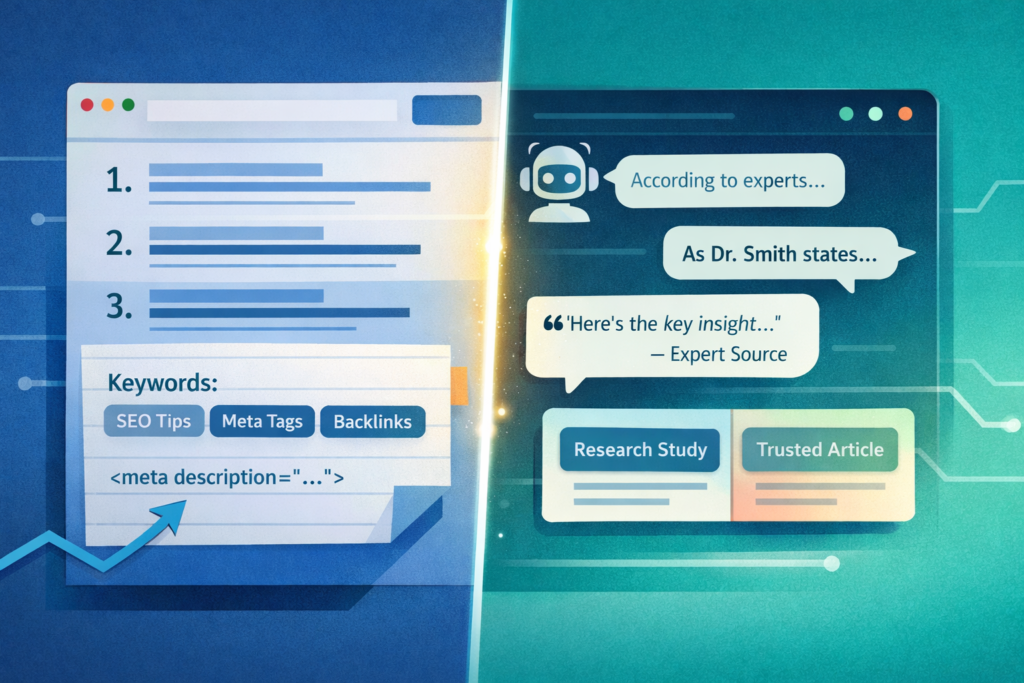
SEO fundamentals haven’t changed as much as the industry pretends. Yes, AI is changing how search works. Yes, Google’s algorithms evolve. But the core principle remains: be clear about what you do and where you do it.
I’ve watched 20 years of SEO tactics come and go. Keyword stuffing, link schemes, content farms, mobile-first indexing, Core Web Vitals obsession. The businesses that succeeded long-term were the ones who simply made it obvious what they offered and where they operated.
What this means for 2026: If someone with 20 miles searches for what you do, can they find you? That matters more than ranking for some perfect keyword phrase. Focus on being genuinely useful for people who are actually looking for your service and can reach you. Local SEO is the solution to this.
4. Your Website Must Work When You’re Not Available
Your website is your 24/7 employee. It should be able to answer basic questions, provide information, and enable people to contact you or take action – even at 11pm on a Sunday.
I’ve lost count of business owners who tell me their website “doesn’t generate leads” while their contact form asks for 15 fields of information, their opening hours are buried in a PDF, and their phone number changes depending on which page you’re on.
What this means for 2026: Can someone who finds your website at midnight figure out what you do, whether you can help them, and how to reach you when you reopen? If not, you’re losing business to competitors whose websites actually work as sales tools.
5. Maintenance Matters More Than Features
The least sexy truth about websites: keeping them running, secure, and up-to-date matters more than adding clever features.
Every January, I get calls from businesses with grand plans for new functionality, integration with the latest platforms, complete redesigns. By March, a third of them have realized they’d have been better off just keeping their existing site working properly.
What this means for 2026: When did you last update WordPress? Test your backups? Check all your forms work? Verify your SSL certificate is current? These aren’t exciting questions, but they’re the difference between a website that works and one that goes down at the worst possible time.
What I’m Actually Preparing For
I’m not completely ignoring changes. There are real shifts happening, particularly with AI-powered search. But these aren’t predictions – they’re things I’m already seeing and adjusting for:
Conversational content is becoming more important than keyword targeting. People are asking search engines questions, and AI is trying to answer them. Content that genuinely answers questions will perform better than content optimized for specific search terms.
Technical basics matter more, not less. As AI takes over more of the “ranking” decisions, having a technically sound website becomes table stakes rather than a competitive advantage.
Speed and simplicity win. This has always been true, but as attention spans shorten and expectations increase, having a fast, simple website that does its job well matters more than having a complex website that does everything poorly.
None of this requires chasing trends. It just requires doing the fundamentals properly.
What You Should Actually Do in 2026
Instead of worrying about predictions, ask yourself:
- Does my website clearly explain what I do?
- Can people easily contact me?
- Does everything actually work?
- Is it being properly maintained?
- Does it answer the questions my customers actually ask?
If the answer to any of these is “no” or “I’m not sure,” that’s your focus for 2026. Not blockchain, not the metaverse, not whatever platform launches next month.
I’ve been doing this since 2004. The businesses that succeed online aren’t the ones chasing every trend. They’re the ones who get the basics right and keep them right.
That’s not a prediction. It’s just reality.
If you’d like an honest assessment of whether your website is doing the basics properly, or if you’re tired of agencies telling you what’s “trending” instead of what actually works, get in touch. After 500+ website launches, I’ve got a pretty good sense of what matters and what’s just noise.


About The Author: Matt
More posts by Matt